
Everything You Need to Know About Small Wind Turbines


Small wind turbines have become a go-to solution for producing renewable energy in all kinds of situations. Whether you want to power a boat, an RV, a remote cabin, or even a house, they offer a compelling alternative to solar panels and fuel generators. Their biggest selling point is their excellent cost-to-efficiency ratio, especially in areas where the wind blows steadily. Unlike solar panels, wind turbines work day and night, which helps cut down your reliance on batteries.
The history of wind power
In ancient times

The first uses of wind power date back more than 5,000 years, when the Egyptians built the earliest sailboats to travel the Nile and harness the wind for transport. Much later, under the reign of Hammurabi, king of Babylon, wind-powered irrigation systems were reportedly introduced to carry water to dry farmland. The ancient civilizations of the Middle East and Asia gradually refined these systems, adapting them to the needs of farming and craftwork.
The Middle Ages
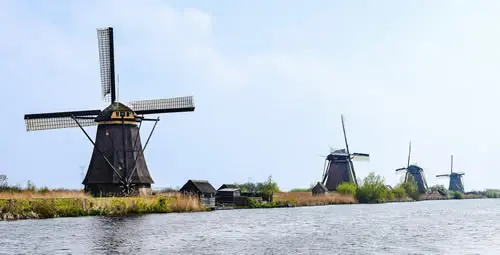
During the Middle Ages, wind power spread widely across Europe with the arrival of windmills, which were used to grind grain, produce oil, make textile fibers, pump water, and even create paper pulp. Over the centuries, technical improvements boosted their efficiency and turned wind into an essential source of mechanical energy.
Modern times

With the dawn of the Industrial Revolution, wind power was slowly pushed into the background by the rise of coal-fired steam engines and by the growth of power plants, which offered steadier and more scalable energy solutions. Even so, in the early 1880s, the physicist Lord Kelvin was among the first to champion the idea of using windmills to generate electricity. The real breakthrough came in 1888, when American inventor Charles Brush built one of the first wind turbines hooked up to an electrical system. Its output was far from optimal, but it proved that the concept could actually work.
The turning point came in 1891, when Danish scientist Poul la Cour realized that the aerodynamic shape of the blades played a decisive role in a turbine’s output. By tweaking the number and shape of the blades, he dramatically improved their efficiency and paved the way for the design of modern wind turbines.
Despite these early advances, wind power stayed in the shadows for much of the twentieth century because fossil fuels supplied most of the world’s energy production. It took the oil crises of 1973 and 1979, which created an urgent push to develop alternative energy sources, for wind to enjoy a real revival. During that period, governments and researchers around the world poured massive investment into improving wind technology, which led to remarkable progress in both efficiency and design. Wind power has kept advancing ever since, carrying both promise and challenges in the pursuit of sustainable energy.
Classifying wind turbines
Wind turbines are classified according to their size and power output.
Micro wind turbines
Micro wind turbines, which top out at 100 watts of power, are designed for very specific applications where energy needs are minimal. They’re often used in remote areas to power small electronic devices like weather stations or communication antennas. Their compact size and light weight make them easy to install and maintain.
Mini wind turbines
Mini wind turbines, with a capacity ranging from 100 watts to 10 kW, are mainly used for home applications that are most often off-grid. They can supply electricity to houses or cabins located in areas with no access to the power grid. You’ll also find them regularly on boats and RVs, where they keep the onboard batteries continuously charged. Their ability to run day and night can make them an appealing alternative to solar panels when the right conditions come together. A well-chosen location is essential to get the most out of them, since obstacles like buildings or trees can seriously hurt their performance. Mini wind turbines often fit into hybrid systems that combine solar and wind power to optimize both energy production and storage, which makes for an excellent solution.
Medium-sized wind turbines
Medium-sized turbines cover a power range running from 10 kW to 200 kW. They’re capable of powering several homes, farms, or small businesses. In regions that enjoy steady winds, they can run completely on their own or supplement grid electricity. Installing them does call for careful planning, though, which is well beyond what the average homeowner can handle.
Industrial wind turbines

Industrial wind turbines are often presented as a sustainable solution. Yet they hide a reality that’s far less flattering. They do produce renewable energy, but their environmental impact is anything but negligible. That’s because each turbine requires hundreds of cubic meters of concrete for its foundations, along with huge amounts of steel and fiberglass, a material that’s notoriously hard to recycle. When you take an honest look at the whole picture, manufacturing, installing, and maintaining these giant structures leaves a heavy carbon footprint, which seriously calls into question their status as a green solution.
On top of these problems, there’s a business model that often drives planned obsolescence, with companies walking away from wind farms once the subsidies dry up and leaving local communities stuck with the cost of dismantling them. In many cases, the very high cost of decommissioning, which is often underestimated, leads to out-of-service turbines being left to rot where they stand, which finishes off whatever green image they had left.
The only case where industrial wind turbines become more or less acceptable is offshore wind farms, because the wind conditions out there are optimal and the energy production is genuinely worthwhile. Offshore installations also help ease some of the problems found on land, like noise pollution and the disfigurement of landscapes. On paper, offshore wind is still a better alternative than nuclear or fossil fuels, but you have to factor in all the long-term environmental and economic impacts before treating it as a miracle solution.
On land, large wind farms mostly serve to generate profit for the energy multinationals, whose goal is still to keep consumers dependent on centralized grids rather than to encourage real energy independence.
Understanding wind and why it matters

Wind is the movement of air from high-pressure zones toward low-pressure zones. Understanding how it behaves is essential when you’re looking into wind solutions, because a turbine’s efficiency depends not only on wind speed, but also on how the wind interacts with its surroundings.
The difference between true wind and apparent wind
In the world of wind power, two concepts complement each other: true wind and apparent wind (also called relative wind). True wind is the natural movement of the air mass. Apparent wind, on the other hand, is the combination of that true wind and the wind created by the object’s own movement. A turbine blade is constantly spinning, so it never feels the true wind on its own. It receives a blend of the true wind hitting the rotor and the wind generated by its own rotation. It’s this apparent wind, and the angle it forms with the blade’s profile, that creates lift and makes the rotor turn. Capturing a steady wind that’s as free of turbulence as possible is therefore essential to maximize production, because obstacles like buildings or terrain disrupt the airflow and create turbulence that drags down the output.
Positioning your turbine to catch the wind
To harness wind energy effectively, a turbine should be installed as high as possible, because wind speed and steadiness both increase with height. So you need to set up your turbine high enough to escape, at the very least, the turbulence near the ground. You also have to account for seasonal variations to guarantee a reliable supply all year round.
Choosing energy independence
One of the main advantages of small wind turbines is their versatility, since they’re easy to install in all sorts of environments. On top of that, they need relatively little maintenance compared to their bigger siblings, and they can be repaired with basic technical skills, which makes them a practical and durable energy solution.
The key to energy independence isn’t just production capacity, it’s understanding how to optimize it.
Understanding the concept of rated power is essential for assessing a turbine’s potential. Rated power is the maximum output a turbine reaches under ideal wind conditions. In reality, though, actual performance depends on several factors, like local wind conditions, location, and seasonal variations. Real output therefore stays highly unpredictable, and a careful site assessment is needed to figure out whether the project is viable or not.
The types of wind turbines
Choosing the right type of turbine is crucial for optimizing energy production and getting the best return on your investment. Wind turbines fall mainly into two categories based on the orientation of their rotor: horizontal-axis wind turbines (HAWT) and vertical-axis wind turbines (VAWT). Each configuration comes with advantages and limitations that are worth knowing so you can make the right choice.
Horizontal-axis wind turbines (HAWT)

Horizontal-axis wind turbines are the most common and the most widely used. Their blades have a design that’s close to airplane propellers. They consist of a horizontal rotor shaft and blades that spin facing into the wind. Their main advantage lies in their high efficiency, since they produce significant power levels even at moderate wind speeds.
HAWTs do require constant orientation adjustments, though, because the blades have to stay facing the wind in order to turn. That means they need a yaw system, a bit like a weather vane, to follow the wind’s direction. This requirement makes them more mechanically complex and calls for regular maintenance to guarantee optimal performance. They also tend to reach high rotation speeds, which can lead to noise problems and mechanical stress over the long run. Despite these challenges, HAWTs are an excellent choice for generating electricity.
Vertical-axis wind turbines (VAWT)

Unlike horizontal-axis turbines, vertical-axis turbines work with a rotor shaft positioned vertically. This lets them catch the wind no matter which direction it comes from, with no need for orientation adjustments. This built-in advantage makes them especially well suited to environments where the winds are often unpredictable.
VAWTs come in several versions, the best known being the Savonius and Darrieus turbines. The Savonius turbine works on the drag principle. It’s ideal for low-wind conditions and for applications that call for high torque with a slow rotation speed. The Darrieus turbine, shaped like an eggbeater, relies instead on aerodynamic lift and reaches high efficiency, but it needs a strong initial push to get started.
One of the main advantages of VAWTs is their slow rotation speed, which makes for quieter operation and reduced wear over the long term. They’re also more pleasing to the eye and blend easily into varied landscapes without needing tall masts. Their efficiency does tend to stay lower than that of HAWTs, though, which makes them better suited as a supplementary source than as a main power supply.
How do wind turbines work?

Understanding the basic principles of how wind turbines work is essential for gauging their role in energy production. The principle is simple and effective. A turbine converts the wind’s kinetic energy into mechanical energy, then turns that mechanical energy into electricity.
Wind energy is captured by the turbine’s blades. When the wind blows across the blades, it creates a pressure difference that makes them spin. This spinning motion drives the turbine shaft, which is connected to a generator. The generator then converts the mechanical energy into electrical energy. Depending on the turbine’s design and the intended application, the electricity produced can be alternating current (AC) or direct current (DC).
For residential and small-scale applications, direct current is often preferred because it’s easier to store in batteries for later use. Most household appliances and grid-connected systems run on alternating current, though, which calls for an inverter to convert the DC energy into AC.
To optimize performance, some modern turbines are fitted with control systems that adjust the blade angle and rotation speed based on wind conditions. These systems prevent overloads and maximize efficiency by ensuring optimal operation in every situation.
In the end, a turbine’s efficiency depends on several factors: the quality of the generator, the aerodynamic design of the blades, and how well the location is chosen.
Wind turbine efficiency
Turbine efficiency is a key factor for estimating their production potential. One of the most fundamental principles governing their efficiency is Betz’s law, which establishes the maximum theoretical amount of energy that can be extracted from the wind.
According to Betz’s law, no turbine can capture more than 59.3% of the kinetic energy of the wind passing through its rotor. This limit, known as the Betz limit, comes from the fact that part of the wind has to keep flowing through the turbine to allow continuous operation. In practice, modern turbines generally reach efficiency levels between 35% and 45%, depending on factors like blade design and system losses.
The Betz limit is expressed mathematically as follows: P_max = (16/27) × 0.5 × ρ × A × V³
In this formula, P_max represents the maximum power that can be extracted, ρ the air density, A the area swept by the blades, and V the wind speed. This equation highlights the direct relationship between wind speed and energy production. Betz’s law provides a theoretical ceiling, but other practical limitations like mechanical losses, turbulence, and less-than-ideal wind conditions cut real efficiency down even further.
Why small wind turbines make sense

Assessing local wind conditions is the first step before you even think about installing a turbine. Wind speed, its consistency, and potential obstacles like buildings, trees, or terrain can have a huge impact on performance. Ideally, small turbines should be installed in open areas, with as few obstacles as possible, to maximize their exposure to the wind. Coastal regions, high ground, and open fields often offer the best conditions. It’s better to measure wind speed with an anemometer over several weeks to get an accurate assessment.
Noise and durability of small wind turbines
How much noise a turbine makes depends largely on its design. Well-built turbines, made with quality components, generate very little noise. Poorly balanced models, or ones fitted with low-quality bearings, can produce significant noise pollution. Noise problems also come from poor blade aerodynamics, flexing blades, misaligned components, or wear over time. High-quality turbines feature low-friction bearings and stiff, aerodynamic blades that guarantee smooth, quiet operation.
You have to understand that turbine noise isn’t only mechanical, it also involves aerodynamic factors. Blades spinning fast can generate noticeable sounds, especially in turbulent wind conditions. Choosing a turbine with a slow rotation speed therefore contributes to quieter operation, which makes it better suited to residential areas.
On the durability side, small turbines hold a clear advantage over solar panels. While the output of solar panels gradually degrades over time with little you can do about it, small turbines can be repaired fairly easily. Every component is replaceable, which extends the turbine’s lifespan well beyond initial expectations. Regular maintenance, like lubricating the moving parts and checking the structural integrity, prevents major breakdowns and keeps the system running at its best.
Choosing a well-built turbine from a reputable manufacturer and sticking to a regular maintenance routine can make all the difference in guaranteeing quiet operation and sustainable energy production.
The cost of small wind turbines
The cost of small turbines varies considerably depending on factors like power output, build quality, and how advanced the technology is. The options range from turbines you build yourself out of recycled materials all the way to high-end commercial models packed with advanced features. Understanding the price variations and knowing what to look for when buying is essential to avoid costly mistakes and guarantee a worthwhile investment.
For those with DIY skills, building a turbine out of recycled materials can be a very budget-friendly solution. With salvaged components, you can put together a working turbine at a truly rock-bottom cost. Unless you’ve got serious DIY talent and professional tools, though, the efficiency and lifespan won’t match those of manufactured models.
On the commercial side, quality levels are all over the map. When buying a turbine, it’s crucial to verify the manufacturer’s claims and make sure the advertised performance isn’t pure fiction. That’s because plenty of manufacturers, especially those offering dirt-cheap turbines, tend to wildly overstate their models’ output. Sometimes to the point of absurdity.
Before going through with a purchase, it’s therefore essential to do thorough research by checking out reputable manufacturers, reading customer reviews, and consulting experts who have hands-on experience with small turbines. Looking into independent performance certifications and warranty terms can also give you some assurance about the turbine’s reliability and efficiency.
Installation and essential components

Installing a small turbine requires careful planning and the right components to guarantee the system’s efficiency, safety, and longevity. One of the most critical parts of a wind system is the charge controller. This electronic device regulates the energy coming from the turbine to prevent overloads and protect the entire electrical system from voltage fluctuations. Unlike solar controllers, controllers made specifically for turbines are designed to handle the highly variable and unpredictable nature of wind energy. Using the wrong controller is therefore a really bad idea.
Expert tip: Ideally, pick a turbine sold together with its dedicated controller. That way, you’ll know for sure that the controller is a perfect match for your turbine model.
Another key component is the inverter, which converts the electricity produced by the turbine into alternating current suitable for household appliances. Choosing a high-quality pure sine wave inverter is essential to guarantee compatibility with sensitive electronics. Unlike modified sine wave inverters, which produce a choppy electrical signal, pure sine wave inverters deliver energy similar to the electricity supplied by the grid. Whether you’re running a refrigerator, a computer, or a power tool, a pure sine wave inverter protects the lifespan of the connected equipment.
Installing a turbine also calls for special attention to the structure. Strong, durable mounting supports are crucial for standing up to varied weather conditions and prolonged operation. We’ll have the chance to come back to this point in detail in the following chapters. Ensuring proper grounding is just as important to protect the system from lightning and electrical surges.
Choosing the right power capacity
Selecting the power capacity of a small turbine depends on several factors. In particular, your own energy needs and the local wind conditions. Understanding your daily electricity consumption is the first step in figuring out the right size. This means assessing the energy demand of the appliances you’ll be powering, while taking into account both peak and average use throughout the day. A thorough energy audit helps pinpoint where consumption can be optimized, which allows for more efficient use of renewable energy.
Local wind conditions play a crucial role in determining a turbine’s efficiency. Factors like average wind speed and seasonal variations need to be carefully assessed to make sure the turbine you choose will consistently meet your electricity needs.
Choosing a turbine that’s slightly more powerful than what you immediately need can give you a safety margin against fluctuating wind conditions and future increases in demand. But it’s just as important to avoid oversizing, since bigger turbines require a higher upfront investment and more maintenance effort. Striking the right balance between production capacity and practical feasibility therefore remains an essential point.
Cutting your energy consumption is also a very important point. So before switching to wind, it’s better to equip yourself with energy-efficient appliances and adopt thoughtful consumption habits to significantly reduce overall demand. Because, as the saying goes: the cleanest and cheapest energy is the energy you don’t use.
Poetic and educational aspects

There’s something inherently poetic about watching a beautifully designed turbine spin gracefully in the breeze. Whether it’s set up in a garden, on a rooftop, or tucked away in the middle of a vegetable patch, a small turbine can become a feature that blends art and utility. Beyond its ability to produce energy, it stands as a symbol of self-sufficiency and human ingenuity.
But the poetry of wind turbines doesn’t stop at aesthetics. Building a small turbine is an adventure. A unique chance to learn and grow. Because building one yourself is a fantastic educational tool that lets you explore, in a hands-on way, essential concepts in physics, mechanics, and aerodynamics. Every step, from calculating wind speed to grasping torque and drag, turns complex scientific principles into something exciting and accessible.
Whether it’s for a personal project, a school activity, or group work, building a small turbine sparks curiosity, creativity, and problem-solving skills. The trial-and-error process, tweaking the blade angles and optimizing performance, makes learning both fun and deeply satisfying. And at the end of the road, when the wind grabs the blades and the turbine starts to spin, the sense of pride and accomplishment is complete.
Conclusion
Exploring the world of small wind turbines opens up a wealth of opportunities to achieve energy independence, reduce your environmental impact, and develop valuable technical skills. Whether you’re looking to power an off-grid house, supplement solar energy, or simply dive into a rewarding DIY project, small turbines offer a solution that’s within everyone’s reach.
In the coming chapters, you’ll find everything you need to go deeper into the technical side. For example, detailed assembly instructions, formulas for your calculations, tips for optimizing performance, and solutions to common problems. Above all, you’ll get to benefit from valuable expert advice that’s the fruit of long field experience.
If you have questions, need advice, or want to share your experience, don’t hesitate to swing by NovaFlow. Connecting with other people who share your enthusiasm can bring you valuable ideas, support, and encouragement. Whether you’re troubleshooting a problem or celebrating a successful installation, we’d love to hear from you.
If you found this guide useful,
support copyleft and open source
and help us bring our projects to life.


